Between The Lines – Jan. 14, 2026 – Full Show
Recently on Between the Lines
Trump’s Lawless Venezuela Offensive Was Never About Drugs, But All About Oil
In the early morning hours of Jan. 3, President Donald Trump illegally ordered the U.S. military to bomb army bases near Venezuela’s capital Caracas...
After Venezuela Attack, Trump Threatens to Strike Iran Again
In recent weeks, major protests have erupted in Iran, initially over economic issues including high inflation and the devaluation of Iran’s currency, the Rial....
‘Simplify Solar’ National Campaign Aims to Make Residential Rooftop Solar More Affordable
Third Act is a national organization of American activists over the age of 60, focusing on the issues of climate and democracy. The group...
This Week’s Under-reported News Summary – Jan. 7, 2026
The decade long civil war in Yemen entered a dangerous new phase as Saudi Arabia attacked a United Arab Emirates shipment of military equipment...
Norman Solomon, cofounder of Roots Action and author of "The Blue Road to Hell: How Corporate Democrats Paved the Way for ...
Special Feature
U.S. Imperialism Roars Back to Life
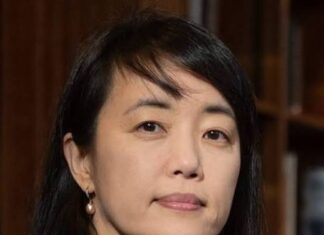
Stephen Zunes, a foreign policy scholar and professor in Middle Eastern studies at the University of San Francisco, analyzes and contextualizes the Jan. 3 U.S. military strike on Venezuela and the abduction of the nation's President Nicolas Maduro and First Lady Cilia Adela Flores.
RICHARD HILL: Welcome to this special edition of Mic Check, WPKN's weekly show that explores regional, national, and global issues and their impact on our local communities. My name is Richard Hill. Today, in response to the arrest and abduction of Venezuelan President Nicolás Maduro by the Trump regime this past Saturday, we depart from our normal format to bring you an examination and analysis of those events and the context surrounding them. And to do that, we welcome Stephen Zunes, a foreign policy scholar and professor at the University of San Francisco, where he teaches courses on the politics of the Middle East and other regions on U.S. foreign policy and on non-violence, conflict resolution and globalization. Professor Zunes currently chairs USF's Middle Eastern Studies Program and serves as a senior policy analyst and advisory board member for the Foreign Policy and Focus Project of the Institute for Policy Studies. He's also an associate editor of Peace Review, a contributing editor of Tikkun and a member of the Academic Advisory Council of the International Center on Nonviolent Conflict.
Professor Zunes, thank you so very much for being with U.S. today. We wonder what you can tell U.S. about all this news, the breaking news about Venezuela, what you've learned, what you understand to be the facts on the ground there and the current climate. Here, we're recording this on Sunday, one day after the U.S. invasion and kidnapping of President Maduro.
STEPHEN ZUNES: Well, as with Iraq, the most recent oil-rich country the U.S. invaded, it's based on lies. That is a clear violation of the United Nations Charter and a violation of the U.S. Constitution, which requires only Congress be the body that can declare war or at least approve military action by the president. It's certainly true that Maduro had become increasingly authoritarian. He stole the last two elections. His corruption and mismanagement was pretty horrible. And there are more than a few Venezuelans who are relieved that he is gone. However, just as there are many Iraqis who are glad that Saddam was no longer in power, that does not mean they want the United States to control the country and their oil fields or anything like that. The basis of the invasion was Maduro's alleged involvement in the drug trade. But even if the criminal charges against him are valid, there is nothing in international or U.S. law that allows a country to attack another country and kidnap their president.
Indeed, there's some irony that the Trump administration is saying that a president of a foreign country can be tried in the U.S. courts for crimes, but an American president cannot be tried in U.S. courts for crimes. And Venezuela is not a major player in the drug trade. Virtually no fentanyl comes from—which is the deadliest drug smuggling in the United States—comes from Venezuela. Most of it's made in China and smuggled through Mexico. Also, I think Venezuela ranked something like 14th in the hemisphere in terms of cocaine production. And again, they're not a major transshipment point either. And also given the fact that the U.S. is the biggest supporter of autocratic regimes in the world, again, Maduro's authoritarianism is not the issue either.
Finally, this idea that they somehow stole our oil. I mean, even putting aside for a moment the idea that another country's natural resources are somehow ours. The fact is that Maduro did not nationalize the oil fields. That was done way back in 1976, long before Maduro came to power, long before Chavez came to power. This was under a centrist pro-American government. In the 1970s, it was a time when dozens of countries were nationalizing their oil and the Venezuelan government paid billions of dollars to ConocoPhillips, ExxonMobil for their oil assets. This was not a confiscation. They did not steal it. So pretty clear this really is about oil and empire. There's no legal or strategic or other justification for this attack.
RICHARD HILL: Yeah. Well, and that was articulated as such by Trump himself in his press conference Saturday morning. But I wonder if we could actually begin looking into the effect of all this. We could begin with Venezuela. What do you see unfolding in the next days and weeks, given what we know at this moment on Sunday, Jan. 4th, like how many were killed by the airstrikes? What do you think is going to transpire there as this very murky situation begins to become more clear?
STEPHEN ZUNES: Well, the military operation itself was well planned and well executed in the sense that there appeared to have been no American casualties and it achieved its objective of kidnapping the president and his wife. But it did end up killing roughly 40 to 50 Venezuelans, both military and civilian. It damaged government facilities in three Venezuelan states, but it was not a regime change situation in that Vice President Delcy Rodriguez is now serving as the constitution dictates as the acting president, given that the president is indisposed. And she has obviously denounced the attack on her country. But Trump has said that she can stay in power as long as she "does what we want." And Secretary of State Marco Rubio added, "We're going to make decisions based on their actions and deeds in the days and weeks to come." And Trump said that there would be a second wave of military action if the United States ran into any resistance from Venezuelan government officials, adding that we're not afraid of boots on the ground.
And when asked who exactly would be running Venezuela, he said, "The people who are standing behind me, we're going to run it." And he pointed to Secretary of State Rubio, Defense Secretary Pete Hegseth and Gen. Dan Caine, the chair of the Joint Chiefs of Staff. It's clear that he really wants Venezuela to essentially be an American protectorate. And indeed, in his national security strategy released last month, called for reviving the Monroe doctrine in which the U.S. would increase military deployments in the region to ensure that the United States be able to control critical supply chains and ensure access to key strategic locations throughout the hemisphere.
RICHARD HILL: So, as we focus not just on Venezuela, but also on the implications for this in terms of the entire Americas, what do you see unfolding in terms of this expansion of the Monroe Doctrine or maybe just say a re-upping of the Monroe Doctrine here in the early decades of the 21st century? How do you see this in that historical context?
STEPHEN ZUNES: Well, Trump has already called it the Donroe Doctrine and he has warned the president of Colombia who—like Maduro is a socialist, though unlike him—he is a democrat, democratically elected, popular, respects civil liberties and freedoms and that kind of thing, that he better "watch his ass." They've also made renewed threats against Cuba. So the problem, of course, is that there seems to be little that is stopping him in the sense that even though this is quite unconstitutional and there was no approval of Congress, the Republican-controlled Senate and House appear to be willing to support him, though there will be efforts by congressional Democrats to try to invoke the War Powers Act to prevent it. And historically, the federal courts have avoided weighing in on foreign policy matters. So clearly the checks and balances, once again, we're seeing how the checks and balances that are supposed to protect our system from an authoritarian-minded executive like Trump are failing.
And Maduro had made a lot of enemies in Latin America and elsewhere. He was not popular. A couple of the more right-wing governments in the region are actually celebrating his removal. But most are opposing it. And indeed, if you look at the history of the United States in Latin America, the gunboat diplomacy and the interventions and the stealing of nationalized resources and that kind of thing. It really does bring back a lot of bad memories for many people. And I think it will only increase anti-American sentiment. And indeed, I think it gives license to (Russia's President Vladmir) Putin and (China's President) Xi (Jinpin) and other authoritarian leaders who may be tempted to take military action against neighbors to take the position, "Well, if the United States with all its resources, the most powerful country in the world refuses to play by the rules, why should we?"
And so I think one way though, other countries and the United Nations system and the International Court and those institutions can't do much to stop Trump. I think that the real harm it's going to do to the United States is that it's going to create a more chaotic world order. We're going to lose what little soft power we had left to influence countries to abide by basic international legal standards.
RICHARD HILL: We're speaking with Stephen Zunes, a professor of foreign affairs at the University of San Francisco, joining U.S. here on Mic Check today for this special edition, looking into the abduction of President Nicholas Maduro on Saturday morning and his removal to the United States. He's now, I believe, in a federal prison in New York City. And as we continue here, Stephen, I'd like to ask you about some of the political players in Venezuela who are probably circling the potential collapse of the government there and people like María Corina Machado and Edmundo González. What do you think their roles might be in this next phase of the aftermath of the U.S. invasion?
STEPHEN ZUNES: Well, Trump surprised a lot of people in not recognizing either her, González as the new president. Machado, of course, has become the most visible opposition leader, particularly since she won the Nobel Peace Prize this past year. And it would seem to indicate that Trump really is serious about centrally trying to run the country as some kind of protectorate. And though at the same time, it may be a recognition that Machado is not really representative of the opposition as a whole. She kind of represents the far right-wing of the opposition. I mean, her advocacy of extreme laissez-faire capitalism. Her support for a short-lived military coup back in 2002. Her connections with the far-right European parties. Her defense of U.S. attacks on boats in international waters, rejecting negotiations of the government and her advocacy of U.S. military intervention has alienated her from much of the opposition.
I mean, when Hugo Chavez first was elected back over 25 years ago, even under him, there were some suppression of opponents and consolidation of power and things like that. But he really did have broad-based support. He won his elections freely. And Maduro won his first election freely. But in the past a decade, Maduro's corruption and mismanagement and everything else is so horrific that many former supporters of Chavez have gone into the opposition as well. And indeed, Maduro has jailed former Chavez ministers. The opposition to his rule is not just the old elite who wanted to go back to the days of democratic, albeit plutocratic rule, where you had these two kind of centrist parties that were very elite dominated and there was this one of the worst maldistribution of wealth in the world. I mean, it's not just the old right-wing opposition, the people you see waving flags and celebrating Miami and that kind of thing.
But the opposition is much broader now. It does encompass the vast majority of Venezuelans, including those on the left. But again, it's a similar situation to the overthrow of Saddam Hussein and people are happy to see the authoritarian president gone. But they want to be able to run their own country. But just the very idea that the U.S. can somehow pick and choose, I mean, "We're going to make sure it's run properly" and essentially saying that we will choose, not the Venezuelan people. But the United States will choose who gets to lead Venezuela in the future is just indicative again, this is not about restoring democracy or anything like that. This is a matter of a kind of neocolonial control. And me, again, Trump has been very clear. The U.S. retains all military options. And as he said, all political military figures in Venezuela must understand what happened in the duro will happen to them if they don't do what we say.
RICHARD HILL: As we look at this in the sort of broad context of the history of U.S. relations with Venezuela over many—at least several presidential administrations, the Bushes through Obama and now Trump 1 and Biden and Trump 2—what can you tell U.S. about the history of U.S. sanctions on Venezuela? Particularly on the Venezuelan oil sector and the effect that this has had and may have had even on somebody who you described as quite corrupt—Maduro in his ineptitude in terms of dealing with the oil industry and other things—to what extent was he a victim of those sanctions and really hamstrung by them to the point where he could not really govern in an effective way?
STEPHEN ZUNES: Well, the sanctions certainly hurt and they didn't just hurt the government, they hurt the Venezuelan people. And while one can certainly say there are situations where sanctions are appropriate in forcing a country to abide by human rights standards or international law or whatever, that's not why the U.S. is sanctioning Venezuela.
Again, think of the other countries to get oil from. Saudi Ararabia, United Arab Emirates, Gabon. I mean, just go down the list. I mean, these are all governments that are far more repressive than Maduro's government. So the sanctions were political. They were mean-spirited. They were not based on any objective criteria and it did make things much more difficult. But at the same time, I think that Maduro's mismanagement and corruption are so severe that even without the sanctions, Venezuela would be in a rough spot. Not as rough as they are, but certainly they would not be doing well that in certain ways the sanctions—and you could say this with Iran and Cuba as well—have ironically strengthened the regime on some level because it has given them the excuse to have more direct control of things than they otherwise would be.
And if people complain about the economy, they can always blame the sanctions, not their own misguided policies. And so I think we need to take a middle ground here, that is, to recognize that the economic situation that people are blaming Maduro on is at least in part the fault of the United States for its sanctions. But at the same time, let's not pretend that without the sanctions, Venezuela would be doing well under Maduro's leadership.
RICHARD HILL: Just to drill down a little bit more into the sort of history of those sanctions in the two Trump regimes, what can you tell us about the specifics in that regard with regard to the oil sector, the financial sector, gold and mining, asset freeze, all this kind of stuff? It seems like that would really tie up a nation's ability to do business of any kind and have to sort of sneak around the back door to actually have any kind of international commercial relationships.
STEPHEN ZUNES: Certainly, but the United States is, while traditionally Venezuela's largest trading partner, is certainly not their only trading partner. They are having fairly normal economic relations with their Latin American neighbors and even with Europe. And also there have been the technological support that the United States and its companies used to provide disappeared. They could make up for those to some degree as well. So again, I think the answer is somewhere in the middle that undeneniably has made things worse, but it's not the only cause for Venezuela's economic collapse.
RICHARD HILL: You mentioned the issue of other nations in Latin America and Central America who will come under threat now, basically having been warned explicitly by Trump in his news conference on Saturday morning. You did not mention Mexico, and I'm wondering what the concerns might be there. What do you think the political structure there might be worried about and should be worried about?
STEPHEN ZUNES: Well, the Trump administration has explicitly warned Mexico that they are willing to take military force, allegedly to stop the drug cartels and others responsible for drug smuggling. The United States back in the '90s under Vincente, the conservative president, Vincente Fox, pushed the government to essentially do a drug war, I mean, to use military force to try to break up the cartels and that made things far worse.
Indeed, tens of thousands of people died in the ensuing conflict and subsequent presidents have tried other ways that are less militarized ways to try to stop the cartels. It's a very challenging situation. The current president, a Democratic socialist, Claudia Sheinbaum, has been trying to take a middle ground, unlike some previous governments where many government officials were essentially in the pay of the cartels or were cooperating with them out of fear of their lives. And unlike some presidents where they've had an all-out war, she's been taking some creative and partially successful ways of going after this
But as she points out, indeed other people have pointed out, it's a question of supply and demand. As long as Americans are consumers of drugs, there'll be people who figure out ways of getting it into the United States and making money off of it. And given that Trump has actually cut back substantially on funding for drug rehabilitation and other efforts to cut back the demand side, it really does seem unreasonable to demand that the president of Mexico or any other Latin American leader somehow unilaterally be able to stop those who are willing to take advantage of this market.
But in any case, this idea that the U.S. sending in special forces to attack these alleged cartels is not only going to be illegal and not only not do much to stop the actual drug trade, because if they do kill a few gang members and others, there'll be those who will certainly rise to take their place. But a lot of innocent people are going to get killed and it will further place the United States and its role of an international outlaw and bring back the worst traditions of U.S. imperialism and in Mexico, which of course go back nearly 200 years.
RICHARD HILL: Well, thank you very much, professor Zunes. I want to ask you just as we close here, if you'd care to share any websites or any other places where people can access your publications, which are numerous and any other resources you think would be valuable as people try to dig into this topic.
STEPHEN ZUNES: Well, you can check out my website, which is simply my name, www.stephenzunes.org. That's S-T-E-P-H-E-N-Z-U-N-E-S. You can also subscribe to my Substack, again, under my name. Follow me on BlueSky and check out my writings in the Progressive and TruthOut and other progressive websites.
RICHARD HILL: Thank you so much, Steven Zunes. As Professor Steven Zunes joining U.S. today from New Zealand here on this special edition of Mic Check and for WPKN's Mic Check, my name is Richard Hill. Thank you so much for being with us.
Popular Stories
WEB FEATURES
SPECIAL REPORTS
U.S. Imperialism Roars Back to Life
Stephen Zunes, a foreign policy scholar and professor in Middle Eastern studies at the University of San Francisco, analyzes and contextualizes the Jan. 3...
Sudan’s Civil War Unleashed Today’s Worst Active Genocide, Famine, War Crimes in the World
Interview with Nathaniel Raymond, executive director, Humanitarian Research Lab at the Yale School of Public Health, conducted by Melinda TuhusMELINDA TUHUS: The work you...
Judge Forces Trump to Use Contingency Funds to Reactivate SNAP Benefits
Peggy Bailey discusses her group's views on the major issues and possible solutions to end the ongoing government shutdown, i.e.: extension of Affordable Care...
What Will It Take For the Gaza Ceasefire To Hold? And, No Kings is...
Nicholas S. Davies discusses his Common Dreams article: "Beware Trump’s Ceasefire Deal Absent Meaningful UN Action to Halt Israel’s Genocide."And Carol Rizzolo, co-lead for...
FACEBOOK FEED
Between The Lines Radio Newsmagazine
Timely, in-depth progressive news and views underreported in mainstream, corporate media BTLonline.org, distributed by 501 (c) (3) tax-exempt organization Squeaky Wheel Productions at http://SqueakyWheel.net.

Disgruntled border agent leaks documents revealing details of secret operations
One unnamed U.S. Border Patrol agent who is reportedly "outraged" at the conduct of U.S. Immigration and Customs Enforcement (ICE) agents is now leaking sensitive details of secret operations that, according to one journalist, show how President Donald Trump's administration is targeting both immigr...

Greenland Defense Front - The Hungry Giant (Official Music Video)
New Merch: https://demonflyingfox.com/Spotify: https://bit.ly/4afQdkmPatreon to support this channel: https://www.patreon.com/user?u=87233464Instagram: https...

Rachel "The Doc" Bitecofer 📈🔭 (@thecycle)
This woman is a mother fucking American hero. Balls of steel Must watch 👇