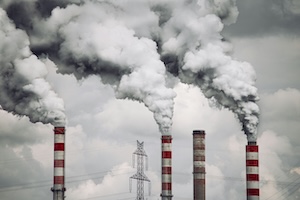
In February, the Trump administration’s U.S. Environmental Protection Agency finalized its rescission of the 2009 greenhouse gas endangerment finding, which cleared the way for their Sept. 14 elimination of regulations that limit planet-warming emissions from coal- and gas-fired power plants. This move repeals the Biden-era rules that required existing coal and new gas plants to capture at least 90 percent of their carbon emissions. The now overturned regulations also tightened restrictions on coal plants’ release of mercury and other toxic metals, which present significant health challenges, especially to children and pregnant women.
Trump’s actions are part of the Project 2025 playbook, the Heritage Foundation’s blueprint for rolling back environmental protections, women’s rights, civil rights and other regulations protecting people from the predations of the fossil fuel industry, “Tech bros”, and the billionaire class in general.
Between The Lines’ Melinda Tuhus spoke with Dr. Lynn Goldman, professor of environmental and occupational health at George Washington University, a pediatrician, and former assistant administrator for toxic substances at the Environmental Protection Agency. Here she talks about the dangers of the Trump regime’s elimination of power plant emission regulations and what’s being done to oppose it.
LYNN GOLDMAN: The endangerment assessment, the only basis that they have for criticizing it—which I completely disagree with—is that we should only be looking at the direct health impacts caused by the actual greenhouse gas pollutants. And I would be the last to say that carbon dioxide harms us per se. Methane can harm us, but not at the levels that we’re concerned about for destruction of our climate and our planet. But methane at those levels isn’t poisoning us. I would agree with that. Some of the other greenhouse gases actually are toxic, but that’s not what they’re focused on. And I think CO2 and methane are the big ones. But every time we’re emitting CO2 and methane, it’s because we are doing combustion of fuels that also emit particulate matter pollution, nitrous oxides and other pollutants that do immediately directly harm our health. And so as a public health person, I look at the whole thing.
That’s what you’re breathing, that’s what you’re getting. But I also think that the fact that the way greenhouse gases harms our health is changing our planet, basically making it uninhabitable. That is important for the health of children and people. And there are many pollutants where they harm us through indirect means, which by the way, also I would say this administration has been attacking regulations on some of those. I’ll give you an example of another one, mercury. So mercury is emitted by the combustion of coal, but the toxicity I’m worried about, is it because you’re breathing that mercury in the air from those coal emissions? No, those coal emissions are falling out into water, being converted by microbes into methyl mercury, being magnified into the food chain and then being eaten and then poisoning the brains of developing fetuses and children. Because it happens that way, does that mean to me as a public health person that I will ignore that it’s coming from coal combustion?
No. The whole point of protecting the public’s health is going upstream and preventing the pollution in the first place. Every single hazard that was identified by the endangerment assessment, the magnitude is greater than what people though when that original report was released.
MELINDA TUHUS: If there’s a lawsuit and I guess lawsuits get filed after these decisions get made, you can’t do them before that. Now that they’ve announced this and there’s a lawsuit, does that keep these changes from happening or can they go forward until the lawsuit’s resolved?
LYNN GOLDMAN: I think the action needs to be published in the Federal Register and that can trigger them filing suit. Those who are suing can attempt to talk a judge into issuing a stay on a regulation while the suit is being considered. So that’s a possibility that there would be a delay through that. I think one thing that a lot of us are focused on is the fact that it was several years ago that the U.S. Supreme Court in Massachusetts v. EPA made a decision that indeed the EPA is authorized to regulate greenhouse gases and needed to do so. And that spurred EPA into the process of making that happen. Supreme Court now, I think, industry may hope might come up with a different decision and there’s a concern that there could be a departure from a precedent in the way that we’ve seen some decisions get reversed and I’m hopeful not, but I think that could be part of the strategy that’s being played out.
I’m sure that the EPA is aware that there will be litigation and that there’s a potential for a stay, but they may be full seeing a case like this advance to the Supreme Court and being able to win for once and for all on this issue.
For more information, visit the Environmental Protection Network at environmentalprotectionnetwork.org.
See more articles and opinion pieces in the related links section of this page. To subscribe to our podcasts, email newsletters, our Between The Lines Radio Newsmagazine Substack or social media, subscribe here.