
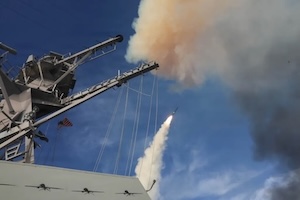
After the effective collapse of the U.S.-Iran 14-point memorandum of understanding—which on June 17 established a ceasefire and initiated a 60-day window to negotiate a permanent end to hostilities—both countries have now resumed missile and drone attacks across the region. After the U.S. launched airstrikes against Iran’s coastal defense systems, Iran retaliated by attacking U.S. military sites in Bahrain and Jordan—and struck two oil tankers from the United Arab Emirates.
President Trump, who announced that the U.S. is re-imposing a naval blockade of Iranian ports starting on June 14, proclaimed that the U.S. will “become the guardian” of the Strait of Hormuz. The president, who pledged to “decimate and destroy” Iran if it carries out a reported assassination plot against him, backed off his earlier threat to impose a 20 percent toll on cargo transiting the Strait.
Between The Lines’ Scott Harris spoke with Raed Jarrar, advocacy director with the group Democracy for the Arab World Now (DAWN) which was founded by Saudi U.S.-based journalist Jamal Khashoggi before his assassination by the Saudi government in 2018. Here, Jarrar assesses the escalation of the conflict, now focused on control of the Strait of Hormuz, and whether or not peace talks are likely to resume to avert all-out war.
RAED JARRAR: The war was waged under the pretenses that Trump believed it’s going to be another Venezuela where he can change the Iranian regime in a couple of days, install a friendly ayatollah and then leave. And that didn’t happen. So 60 days after the war, the United States and Israel, they had a military failure they could not achieve with force what they wanted to achieve, which is the destruction of the Iranian government. In the case of Israel, it’s a destruction of Iran as a state, as a country, as a people. They failed. So now they are negotiating this ceasefire agreement because they failed to get what they want to do through force. And of course, Trump and Netanyahu don’t believe in ceasefire and they don’t support peace. So we’re seeing on a daily basis breaches of the ceasefire, Israeli-style breaches of the ceasefire, the same way that Israel breached the ceasefire in Gaza and Lebanon for months and years.
They’re doing the same with Iran now, almost daily breaches of the framework agreement, daily breaches of the ceasefire framework. I wouldn’t say that the agreement is completely dead yet because Trump and Iran still have a lot to lose if they go back to full-fledged war. So it is still grounded in some sort of an ongoing negotiations. But there is obviously a daily flare up, more bombing and more killings that is happening. And overall, I wouldn’t say the situation is very stable.
SCOTT HARRIS: Absolutely not. I wanted to ask you about some of the causes of why do you think this ceasefire agreement could not persist until they got a final agreement? They had 60 days to do it. There’s a lot of speculation that Trump’s erratic behavior, his unhinged and toxic rhetoric and the incompetence of Jared Kushner, Trump’s son-in-law, and his golfing buddy, Steve Witkoff, also contributed to the problems with these negotiations where they’ve now fallen apart.
For more information, visit Democracy for the Arab World Now (DAWN) at dawnmena.org
Listen to Scott Harris’ in-depth interview with Raed Jarrar (29:07) and see more articles and opinion pieces in the related links section of this page. To subscribe to our podcasts, email newsletters, our Trump authoritarian playbook Substack or social media, subscribe here.


